Gentle · non-invasive · individualized

A gentle approach that helps your brain find calm and focus

Neurofeedback with Dr. Monica Breaux, PhD, LMSW — a safe, drug-free way to teach the brain healthier attention and mood flexibility. Supportive, personalized care for children, adults, and families.

✓ No needles ✓ No medication ✓ Awake & engaged ✓ Private

PhD · LMSW

Doctorate & licensed clinical training

Individualized care

Goals set for each person

Alongside your care

Complements existing plans

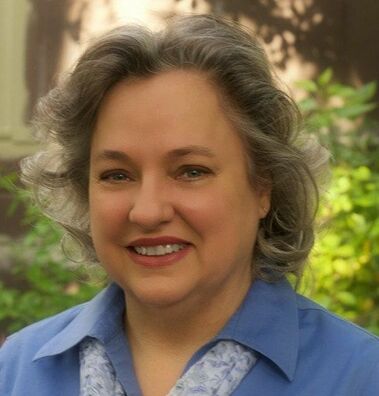
Dr. Monica Breaux, PhD, LMSW
About

Meet Dr. Monica Breaux

Monica Breaux, PhD, LMSW is a clinician, educator, and neurofeedback provider who has spent her career helping individuals and families move toward greater calm, focus, and wellbeing.

An internationally recognized speaker, she pairs clinical training as a Licensed Master Social Worker with a warm, person-centered approach. Her neurofeedback practice offers a gentle, research-informed path for people of all ages — always individualized, and always designed to work alongside the rest of your care.

PhD Licensed Master Social Worker Neurofeedback Provider Speaker & Educator
What is neurofeedback?

A mirror for the brain

Neurofeedback uses gentle sensors to measure your brain's electrical activity and turns it into information you can see or hear.

Think of it as a mirror for the brain. A mirror helps you adjust your posture; neurofeedback gives your brain information about its own activity, so it can practice being calm and focused.

How does it work?

When your brain moves toward the set goal, the game, sound, or video responds. Through repetition, your brain learns to improve function.

The feedback loop

  1. 1EEG sensors read your brain's activity
  2. 2The screen shows those measurements
  3. 3Goals are set by the therapist
  4. 4The software gently rewards progress
  5. 5The brain practices and adapts over time
Who may benefit

A supportive approach for many goals

Neurofeedback is used as a supportive approach for people addressing:

Autism Spectrum Disorder

Support for social communication and emotional regulation.

Attention & focus

Attention, focus, and impulse control.

Stress, anxiety & mood

Support for stress, anxiety, and depression.

Sleep & self-calming

Sleep quality and self-calming.

Peak performance

Peak performance and mental flexibility.

Repetitive thoughts & habits

Support for repetitive thoughts and habits.

What to expect

Gentle, safe, and on your terms

✓ Non-invasive

✓ No needles

✓ No medication is administered

✓ You remain awake and engaged

✓ Your thoughts remain private

✓ Sessions are brief and simple

✓ Feedback is immediate & relaxing

✓ Goals are individualized

✓ Complements existing care plans

Getting started

Introductory session series

A gentle way to experience neurofeedback and see if it's a good fit — four short, individualized training sessions.

  • ✓ Four sessions of individualized training
  • ✓ 10–20 minutes each — brief and relaxing
  • ✓ Goals tailored to you from the very first visit
Request the intro series

Introductory series

$200

for four sessions · $50 each

Reach out below and Dr. Breaux will follow up to schedule your first visit.

Recent research

Research on neurofeedback & autism

A selection of recent peer-reviewed publications. Research is promising in some areas and continues to grow.

High-order alpha-band network reorganization underpins clinical symptom alleviation following EEG neurofeedback in preschool children with autism

Kang J, Li Y, Li X, Chen H · Frontiers in Human Neuroscience, 2026

EEG neurofeedback has shown clinical efficacy in ameliorating ASD symptoms.

Neurofeedback for autism spectrum disorder: current evidence, challenges, and future directions

Zhang Y, Wang J-J, Xing H-Y, Yan J · World Journal of Psychiatry, 2026

A promising noninvasive intervention targeting social communication and emotional regulation.

Entropy and complexity in QEEG reveal visual processing signatures in autism

Tenev A, Markovska-Simoska S, Müller A, Mishkovski I · Brain Sciences, 2025

QEEG offers potential for identifying biomarkers and guiding neurofeedback.

Application of neurofeedback in autism spectrum disorder: a systematic review and meta-analysis

Alhwaiti M · International Journal of Developmental Disabilities, 2026

May produce meaningful improvements over relatively short training periods.

Neurofeedback should play a major therapeutic role in many difficult areas. If any medication had demonstrated such a wide spectrum of efficacy, it would be universally accepted and widely used. It is a field to be taken seriously by all.
Frank H. Duffy, M.D. · Harvard Medical School

Important to know

Research is promising in some areas, and neurofeedback is individualized care. It may be used alongside therapy, education, medication, or medical care — not automatically instead of them. Dr. Breaux will always work with you to understand your goals and coordinate with the rest of your care team.

Contact

Let's take the first step together

Share a little about what you're hoping for, and Dr. Breaux will personally follow up by email to answer your questions and help you get started.

  • ✓ Warm, judgment-free conversation
  • ✓ For children, adults, and families
  • ✓ No obligation — just a good first step

We'll reply by email. Your information stays private.